For Niagara’s unhoused or marginalized residents, taking care of one’s health may not be a priority, and one for which there are many barriers. Making appointments, keeping appointments, having a valid health card, trusting the medical establishment – these can all be difficult to accomplish. The result is often poor health or escalating problems that lead to visits to an emergency department.
But a $15,000 Community Grant from NCF is giving REACH Niagara’s Mobile Health Clinic a new diagnostic tool to eliminate one more of those barriers.
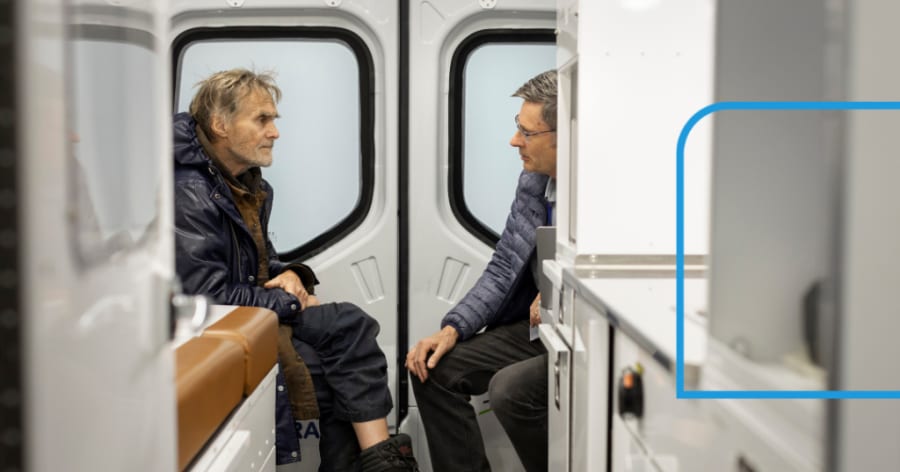
REACH Niagara’s Sprinter van, with two on-board medical suites, visits 10 different Niagara locations a week on a consistent schedule. Now it is also one of the first in Canada to have a portable ultrasound machine, which allows for even better diagnostic work with people who would normally find it hard to keep an ultrasound appointment or have an inability to pay for the appointment by not having a valid health card.
“We’re so excited to be able to offer this for folks,” said Carolyn Dyer, executive director of REACH Niagara. “We discovered that many of the folks we were serving are very unwell, and that's often because they've neglected their health for a very long time, and they need more diagnostics.”
In the early stages of the machine’s deployment, “we'll be focusing on gallbladders, renal, and cardiac systems. Phase one is to focus on those major systems because we're seeing that as a big need,” she said. Phase two will add “early detection of pregnancy, with the ability to support people more effectively in knowing their options. It’s very exciting that we can do that.”
The grant covers training for the ultrasound machine and supplies for the mobile clinic, for things such as wound care. People who spend a lot of time on their feet or who utilize substances can often develop wounds that fail to heal, which then cause more serious problems.
Last year, the mobile clinic offered 2,500 treatments during 1,800 visits – removing barriers and offering hope and better health in ways that work for people who may not trust the system, Dyer said. There is always a doctor or nurse practitioner on board, and Dyer said how the care is provided is as important as what that care is.
“When you're dealing with equity-deserving populations, trust is a huge factor, and we offer trauma-informed care. For us, the biggest thing is, how do we provide as much care as we can?
“We're really grateful to the Niagara Community Foundation for assisting us with this because it truly does make a significant difference in these folks’ lives.”